
As loving plant parents, few things are more disheartening than discovering our green companions under siege by unwelcome pests. A single infestation can gradually drain a plant’s vitality. And once it takes hold, it can be very difficult to eliminate. Preventing the spread of pests in the greenhouse has been particularly challenging. Visitors may unknowingly bring in tiny stowaways, which quickly find shelter in the many hidden corners of our space.
Over time, we’ve developed a thorough system for spotting and stopping pest problems before they get out of hand. And today, we’d like to share that strategy with you.
If you’re facing an infestation, don’t worry, all is not lost. With early detection and the right approach, getting rid of these critters can be simple and effective. The first step is to identify which pest is causing trouble and understand its life cycle. Below, you’ll find a practical guide to fighting off these unwelcome guests, followed by a breakdown of the most common pests that target indoor plants.
General treatment
The first, and arguably most important, step in pest control is regular plant monitoring. But this habit goes far beyond pest prevention: by keeping a close eye on your plants, you’ll be able to catch early signs of trouble related to watering, lighting and soil conditions. Plus, the daily ritual of observation can be quite the meditative experience.
When inspecting your plants, be sure to check the undersides of leaves and the crevices where stems meet leaves, which are the favorite hiding spots for many pests. If you discover an infestation, immediately check nearby plants and isolate any affected ones in a designated quarantine area to prevent the problem from spreading.
Once you’ve identified the pest species, you can begin the appropriate treatment (detailed in the sections below). When using insecticidal sprays, ensure thorough coverage of the entire plant, including the undersides of leaves and stem joints, even if no pests are visibly present. Most treatments will need to be repeated weekly to fully disrupt the pest life cycle.
There are several effective spray treatments available, each with its own strengths. Neem oil is a popular natural option that not only kills soft-bodied insects like aphids and spider mites but also disrupts their life cycle, preventing further reproduction. Insecticidal soap is another gentle yet effective solution that works by suffocating pests on contact and is ideal for regular use. For tougher infestations, pyrethrin-based sprays can offer stronger control, though they should be used with care to avoid harming beneficial insects or sensitive plants. Always follow label instructions and test any treatment on a small area first to ensure your plant tolerates it well.
Some pests can also attack the root system. In these cases, a soil drench may be required. You can use a diluted solution of hydrogen peroxide, neem oil, or insecticidal soap for this purpose. However, because drenches can stress the plant, they should only be used when absolutely necessary.
There are countless species of pests that can be found on house plants. Below we’ve outlined the five most common types of pests: Mealybugs, scale insects, spider mites, thrips and fungus gnats.
Mealybugs

Mealybugs are small, soft-bodied insects covered in a white, waxy coating that makes them look like tiny bits of cotton clinging to your plants. They tend to gather in leaf joints, stem crevices, and other hard-to-reach areas, feeding on plant sap and weakening the plant over time. In severe infestations, they can also invade the roots, making them harder to detect and treat. Mealybugs reproduce rapidly, especially in warm, humid environments, and their waxy coating offers strong protection against many pesticides. Early detection and consistent manual removal are key to control.
Scale Insects
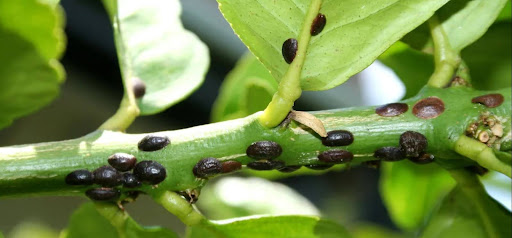
Scale bugs often appear as immobile, dome-shaped bumps on plant stems and leaves, ranging in color from brown to gray. These pests are extremely tough to eliminate because of their hard, shell-like covering that protects them from most chemical treatments. Their life cycle includes a mobile “crawler” stage, followed by a sedentary adult phase. For effective control, a combination of rubbing alcohol (which dissolves their protective waxy coating), followed by pesticide use and physical removal by hand is usually necessary.
Spider Mites

Spider mites are nearly invisible to the naked eye, but the fine webbing they spin across leaves and stems is what gives them away. They thrive in hot, dry conditions and outbreaks are often triggered when plants are under-watered or stressed. These tiny arachnids feed on plant cells, leaving behind tiny pale spots on the leaves. Due to their small size, spider mites can be carried onto your plants by the wind. A thorough spray of water on the undersides of leaves can help dislodge mites and disrupt their colonies.
An effective and ecological way of dealing with spider mites is the use of predatory mites. Predatory mites are beneficial insects that will spread out on your plant on the hunt for spider mites and usually come in little satchels that you can attach to your plants.
Thrips

Thrips are slender, winged insects that are difficult to see but leave behind noticeable damage: distorted, silvery leaves, black specks of excrement, and stunted growth. Their life cycle is rapid, with multiple generations per season. Adult thrips lay their eggs inside plant tissue, and their larvae feed on new growth before dropping to the soil to pupate.
Spraying an infested plant with insecticide will only work against the larval and adult stage thrips, while the eggs inside the leaves and pupae in the soil will be unharmed. Therefore consistent weekly pesticide use is crucial to ensure the suppression of thrip populations. As insecticidal soap is not very effective for thrips, we recommend the use of either neem oil or pyrethrin-based sprays.
Fungus Gnats

Fungus gnats are small, dark, mosquito-like flies that hover around the base of plants. While the adults are mostly a nuisance, their larvae feed on organic matter in moist soil and can damage delicate plant roots. They thrive in wet conditions, so allowing the top layer of soil to dry out between waterings is an effective prevention method. Sticky yellow traps can help monitor and reduce adult populations, and soil drenches may be used if larvae numbers are high. For persistent fungus gnat infestations, a soil drench containing Bacillus thuringiensis var. israelensis can be highly effective. This naturally occurring bacterium targets and kills fungus gnat larvae in the soil without harming plants, making it a safe and targeted biological control.
We hope this guide has been helpful and gives you the confidence to tackle any pest infestation that might threaten your beloved plants.
Written by our Administrative Coordinator
 Concordia Greenhouse Project